
What is a placebo?
Placebo is derived from the Latin word “placere” which means “to please”.
–Definitions-:
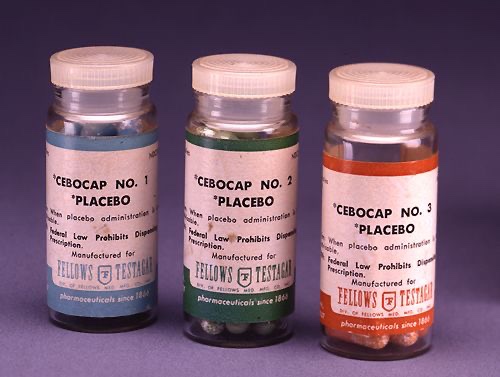
1. A placebo is a substance or treatment which is designed to have no therapeutic value.
2. Any sham medication or procedure designed to be void of any known therapeutic value.
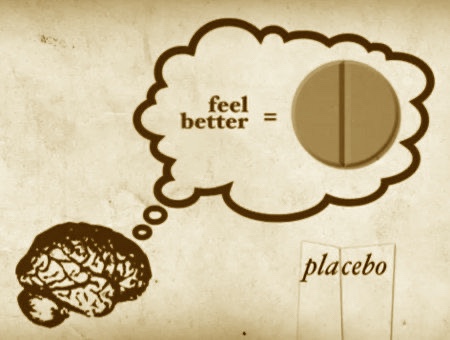
3. Simply it can be explained as a way to fool one’s brain into believing in a fake treatment that helps one to get rid of some symptoms like pain, depression, etc.
Common examples of placebo include inert tablets (like sugar pills), inert injections (like saline), sham surgery, and other procedures.
Some studies conducted on the placebo effect.
1. In 1996, 56 volunteers took part in a study to test a new pain killer called trivaricaine on each subject on index finger was covered in the new pain killer while the others remained untouched. Then, both were squeezed in painful clamps. The subjects reported that the treated finger hurt less than the untreated one. This shouldn’t-be surprising except trivaricaine wasn’t actually a painkiller, just a fake concoction with no pain-easing properties at all.
2. A 2014 study led by Kaptchuk and published in SCIENCE TRANSLATIONAL MEDICINE explored this by testing how people reacted to migraine pain medication. One group took a migraine drug labeled with drug’s name, another took a placebo labeled “placebo”,and the third group took nothing. The researchers discovered that the placebo was 50% as effective as the real drug to reduce pain after a migraine attack.
The researchers speculated that a driving force beyond this reaction was the simple act of taking a pill. “People associate the ritual of taking medicine as a positive healing effect”, says Kaptchuk.
3. A 2015 study investigated the placebo effect in 35 people depression participants weren’t actually taking any medications for depression at the time. Each participant received placebo pills. However, some were labeled as fast-acting antidepressants (active placebo) while others were labeled as placebos (inactive placebo). Each group took the pill for a week. At the end of the week, a PET scan measured brain activity. During the scan the active placebo group to placebo injections being told that it may improve their mood. The inactive placebo group received no injection. The two groups switched pill types for another week a second PET scan was performed at the end of the week. All the participants then received treatment with antidepressant medications for 10 weeks.
Researchers found that some individuals experienced the placebo effect and this effect impacted their activity and response to antidepressants. The results of the study are as follows -:
– a decrease in depression symptoms was reported when people were taking the active placebo.
– taking the active placebo (including the placebo injections) was associated with PET scans that showed an increase in brain activity in areas associated with emotions and stress regulation.
– people who experienced an increase in brain activity there are after had an improved response to the anti depressants used at the end of the study.
Placebo in daily life.
The effects of a placebo are usually linked to medicine, but the can be found anywhere around us. Did you know that the pedestrian traffic lights are often just so they could give us a sense of control? Or that office building often has systems that emit fake air conditioning noise and also fake heat regulators? Perception is the key to everything.
In many countries around the world, the law didn’t precisely regulate how to run unconventional and alternative chemical systems for eg -: homeopathy, ayurveda, acupuncture, acupressure, physiotherapy, Chinese herbal medicine, bioenergetic therapy, reiki, chiropractic, aromatherapy, sound therapy, etc. so, because of that many unqualified therapists have taken advantage of such a chaotic regime and tried to make money out of it, due to the lack of knowledge and weaknesses of sick people. Such unprofessional therapists take advantage of placebo which in-fact sometimes improve the health of the patient.
Application of placebo.
– In medical research.
In medical research, some people in a study may be given a placebo, while others get the new treatment being tested. The purpose of doing this is to determine the effectiveness of the new treatment. If participants taking the actual drug demonstrate a significant improvement over those taking the placebo, the study can help support the claim tor the drug’s effectiveness.
When testing new medications or therapies, scientists want to know if the new treatment works and if it’s better than what’s already available. Through their research, they learn the sort of side effects the new treatment might produce, which patients may benefit the most, and if the potential benefits outweigh the risks.
By comparing the effects of treatment to a placebo, researchers hope to be able to determine if the effects of the medicines are due to the treatment itself or caused by some other variable.
– In psychology experiments.
In a psychology experiment, a placebo is an inert treatment or substance that has no known effects. Researchers might utilise the placebo control group, which is the group of participants who are exposed to a placebo or fake independent variable. The impact of this placebo medication is then compared to the results of the experimental group.
Even though placebos contain no real treatment, researchers have found they can have a variety of both physical and psychological effects. Participants in placebo groups have displayed changes in heart rate, blood pressure , anxiety levels, pain perception, fatigue and even brain activity. These effects point to the brain’s role in health and well being.

– What can we learn from a placebo?
In a nutshell, a placebo is a way to fool our brain to make it believe in something which is not true which in turn gives some benefit. This physiological behaviour tells us our simple thoughts can manipulate our feelings, health.
The way how we perceive things around us has a great impact on our mental and physical health, even the definition of a healthy person by the World Health Organisation states a person is stated to be healthy if he has physical, mental, and social well being.
You can give yourself a placebo by practicing self-help methods. Engaging in the ritual of healthy living — eating right, exercising, yoga, quality social time, meditating — probably provides some of the key ingredients of a placebo effect.
While these activities are positive interventions in their own right, the level of attention you give can enhance their benefits. “The attention and emotional support you give yourself is often not something you can easily measure, but it can help you feel more comfortable in the world, and that can go a long way when it comes to healing.”


Leave a comment